Super Glue Applications in Automotive Part Assembly: A Technical Guide

While you may not recognize the term cyanoacrylate adhesive, you’ve probably used it before in the form of super glue for household repairs. Also called instant glue, power glue, or by brand names like Krazy Glue, cyanoacrylate adhesives are valued for their quick curing properties, thermal shock resistance, impact resistance, flexibility, wide viscosity range, and ability to bond a wide range of automotive component substrates.
This guide explores how these adhesives are used in the automotive industry, how they work, their benefits, and recent advancements in automotive adhesive technology.
How Cyanoacrylates (AKA Instant Adhesives) Work
Cyanoacrylates need moisture to create a bond, and typically, the humidity in the air and on the substrate surface provides all the moisture they need to work effectively. The molecules in cyanoacrylate adhesives react instantly with atmospheric moisture to form long polymeric chains between the material surfaces. In the context of adhesives used in the automotive industry, this quick reaction makes them an ideal choice for fast, reliable assembly work. For best bonding performance, press the substrates together until the glued assembly can be carefully handled, which is typically very fast, ranging from 5 to 90 seconds. This is known as fixture time. The bond will strengthen after about 10 minutes and fully cure within 24 hours.
It doesn’t take much cyanoacrylate adhesive to create a strong joint. One drop can cover about one square inch. While porous surfaces may require slightly more, adding excess adhesive generally won’t increase strength. Instead, it may waste product and cause overflow (also known as squeeze-out) between the substrates, creating the need for additional cleanup or finishing.
When a strong bond must form instantly, an accelerator (aka setter) can be used. Apply the adhesive to one surface and the accelerator to the other; when pressed together, the materials will bond immediately. This is especially useful when time is critical or when the joint could be disturbed before the adhesive fully cures.
Another option is to spray an accelerator over the bond line after applying the adhesive and mating the two substrates together. This method works well in dry environments or when bonding oily or acidic substrates. For certain engineering plastics with low surface energy, such as polypropylene, a cyanoacrylate primer can also be applied to improve bonding conditions and ensure lasting adhesion.
Advancements in Cyanoacrylate Adhesives for the Automotive Industry
Modern cyanoacrylate adhesives have evolved to meet the changing needs of vehicle manufacturing:
- High-temperature resistance: New formulations can maintain bond integrity under extreme heat, making them more reliable in under-hood and high-performance automotive applications.
- Improved bonding for lightweight materials: Enhanced formulas allow for stronger adhesion to aluminum, composites, and engineered plastics commonly used in today’s lighter, more fuel-efficient vehicles.
- Long-term moisture exposure grades: Specialty cyanoacrylate formulations have greater moisture resistance, providing durable bonds in humid or wet conditions.
- Improved bonding for flexible substrates: Flexible instant cyanoacrylate adhesives are designed for use on flexible materials such as rubber, film, and leather products. These adhesives provide good moisture and heat resistance, making them suitable for challenging environments while maintaining bond flexibility.
These developments give automotive manufacturers and repair professionals greater flexibility in design and assembly without compromising durability.
Key Advantages of Cyanoacrylates for Automotive Applications
Cyanoacrylates are widely used in the automotive industry because of their exceptional bond strength and reliability. As one of the most versatile adhesives used in automotive industry applications, they can withstand extreme conditions, performing in temperatures from -40° to 250° F. Cyanoacrylates are ideal in situations where other glues or fasteners aren’t practical, such as:
- Joining dissimilar materials
- When clamping the materials isn’t possible or ideal
- Performing maintenance or repairs
- Bonding rubber or engineering plastics
- When appearance matters
- When speed matters
- When the adhesive must resist chemicals, water, and heat
Although cyanoacrylate adhesives create a permanent bond, it is possible to break it intentionally using very high heat (above 350° F) and a debonding solvent like acetone.
Comparing Cyanoacrylate Adhesives to Other Automotive Bonding Methods
In automotive manufacturing and repair, there are a variety of bonding options, each with its own strengths and limitations. Cyanoacrylate adhesives stand out for their speed, ease of use, and ability to create strong bonds without heat or complex clamping systems.
- Versus epoxy adhesives: Epoxies are valued for their durability and gap-filling ability, but they generally require longer curing times, sometimes several hours. Epoxies also require more preparation and precise meter mixing. Cyanoacrylates cure in minutes or even seconds, making them ideal for fast assembly, on-the-line repairs, or situations where downtime must be minimized.
- Versus polyurethane adhesives: Polyurethanes provide flexibility and good adhesion to a wide range of substrates, but they can be more challenging to apply and may require moisture or elevated temperatures to cure effectively. Cyanoacrylates offer a faster, simpler application process while still achieving high bond strength on metals, plastics, and composites.
- Versus mechanical fasteners: Bolts, screws, and rivets provide immediate mechanical strength, but they add weight, require drilled holes, and can concentrate stress at specific points. Cyanoacrylate bonds distribute loads evenly, reduce the need for visible hardware, and help maintain clean design lines.
- Versus hot melt adhesives: Hot melt adhesives are solid at room temperature and activated when heated beyond their softening point (above 250° F). Although they provide a good bond for flexible materials, hot melt adhesives are not suitable for structural bonding and can take hours to reach full bond strength. Cyanoacrylates are suitable for rigid substrates and can reach full bond strength in seconds.
In many cases, cyanoacrylate adhesives are used in combination with other bonding methods such as mechanical fasteners to provide both structural reinforcement and long-term durability. The best choice depends on the materials involved, the desired bond characteristics, and the demands of the application.
Typical Applications of CA Glues in the Automotive Industry
In the automotive industry, weight reduction is an ongoing goal, but it must be achieved without compromising safety or performance. While cyanoacrylate adhesives can’t replace welding or mechanical fasteners in load-bearing or structural components, they can play a role in certain lightweighting strategies.

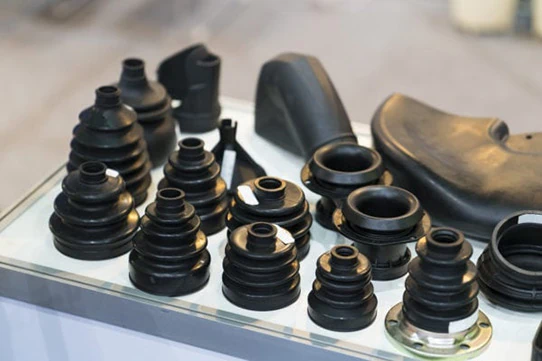
One example is in reducing noise, vibration, and harshness (NVH). Cyanoacrylates can be used to bond rubber to metal or to attach a nylon mesh sleeve over a rubber hose. This helps prevent abrasion that can occur when a bare rubber hose rubs against a metal surface, contributing to longer component life and improved performance without adding unnecessary weight.
Beyond NVH-related uses, cyanoacrylate adhesives are applied in a variety of non-structural areas both inside and outside the vehicle.
Exterior Applications
- Door weather stripping: Cyanoacrylates securely bond rubber weather stripping to door frames, providing a tight seal against the elements.
- Sunroof and deck lid seals: These adhesives are suitable for bonding rubber seals around sunroofs and deck lids, creating a waterproof barrier.
- Side guard moldings: They can attach side guard moldings to the car body, enhancing the vehicle’s appearance and providing some protection.
- Windshield wiper blades: Cyanoacrylates can be used to repair or reinforce the connection between the wiper blade and its arm.
- Tail lamp rubber seals: They effectively bond rubber seals around tail lamps, preventing water and dust ingress.
- Bright trim window molding end caps: These adhesives can secure end caps on window moldings, maintaining a finished look.
- Grill/spoiler fascia trims: Cyanoacrylates can bond decorative trims and fascias to the grill or spoiler.
Interior Applications
- Interior trim and upholstery: They can be used to reattach loose trim pieces or repair upholstery, providing a strong and lasting bond.
- Rubber grommets for dash/firewall thru holes: Cyanoacrylates can secure rubber grommets in place, protecting wires and cables.
- Headliner components: They can bond headliner components to the car’s roof.
- Hand brake covers: Cyanoacrylates can be used to repair or attach hand brake covers.
- Gear shift selector covers: They can be used for bonding gear shift selector covers.
- Plastic clip assemblies: These adhesives can be used to repair or replace broken plastic clips that hold interior panels and trim in place.
- Wire harness assemblies: Cyanoacrylates can secure wire harnesses to the car’s body, preventing rattling and damage.
Under-the-Hood/Engine Applications
- Anti-vibration motor mounts: Cyanoacrylates can be used to reinforce or repair motor mounts, reducing vibrations.
- Gaskets: They can be used to bond gaskets in place, ensuring a proper seal for fluids and gases.
- Air/fuel/transmission hose and clamp assemblies: Cyanoacrylates can be used to secure hoses and clamps, preventing leaks and ensuring proper fluid flow.
- Electronic and sensor components: These adhesives can be used to bond and secure various electronic components and sensors under the hood.
Other Applications
- Wire harnesses: Cyanoacrylates are used for securing wire harnesses to various parts of the car, including the dashboard, engine bay, and chassis, to prevent wire chafing and damage.
- Automotive sensors: They are used to bond and encapsulate sensors for accurate readings and reliable operation.
- Encapsulation and sealing of electronic components: Cyanoacrylates can be used to seal and protect electronic components from moisture and other environmental factors.
Choosing the Right Cyanoacrylate for Automotive Parts
Choosing the right cyanoacrylate adhesive for automotive parts depends on several factors, including the materials being bonded, the required bond strength, environmental conditions, and application specifics.
Cyanoacrylates are effective on a diverse range of automotive materials such as plastics (ABS, acrylic, nylon, polycarbonate, PVC), metals (aluminum, steel, zinc), composites (carbon fiber, fiber-reinforced plastics), and natural materials (leather, wood). Primers are typically used for low surface energy plastics like polypropylene or polyethylene. Accelerators are sometimes used to bond porous materials like fabric, leather, and other absorbent substrates.
Furthermore, choosing the proper cyanoacrylate viscosity for the application depends on the fit between mating parts:
- Thin: Flows easily into tight-fitting parts and small cracks for quick, precise bonding.
- Medium: Versatile for filling small gaps and handling a range of general repairs.
- Thick: Ideal for bigger or uneven gaps and vertical or overhead surfaces where run-off is a concern.
Other considerations when selecting a cyanocrylate for automotive bonding applications include the following:
- Bond strength: Depending on the forces and loads the bonded parts will encounter, make sure the chosen cyanoacrylate has sufficient shear and tensile strength.
- Environmental resistance: Choose adhesives that can withstand the specific operational conditions of the application. For example, heat-resistant methyl cyanoacrylates are often preferred to bond metal or engine surfaces that experience high temperatures.
- Cure time: Some cyanoacrylates have very fast cure times, while others take longer to reach full bond strength. Choose an adhesive that matches the specific application’s assembly speed.
- Peel strength: Standard cyanoacylates tend to have relatively low peel strength, so determine the need for peel resistance. Also, consider whether the parts will ever need to be disassembled and find methods for dissolving the adhesive without damaging the parts.
CA Glues at Aron Alpha
Given their strength and versatility, cyanoacrylate adhesives will have their place in the automotive and other industries for years to come. As one of the original producers of cyanoacrylate adhesives, many manufacturers turn to us for their car glue adhesive needs. For more than 60 years, Aron Alpha has been serving a variety of manufacturing sectors throughout Japan, Europe, South America, and North America, including automotive, general assembly, and electronics.
We have adhesives, primers, accelerators, and applicators to suit almost any application. If we can’t find a standard product for your needs, we’re happy to develop custom formulations targeted to the unique needs of your application.
To learn more about automotive cyanoacrylate adhesives or about our products and capabilities, reach out to us today.