How the Dental Industry Relies on Cyanoacrylate Adhesives
Precision and Performance in Dental Bonding
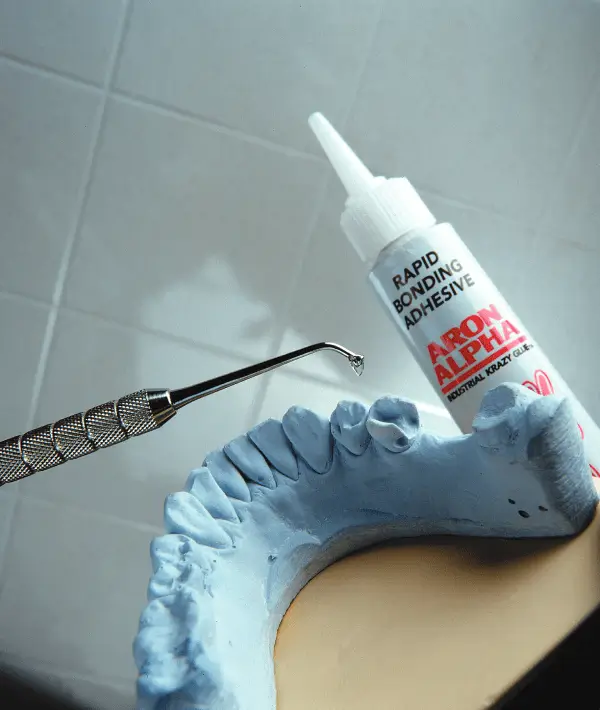
Dental laboratory work requires precise placement and reliable bonds. Whether assembling prosthetics, fabricating models, or completing repairs, adhesive performance directly affects both accuracy and efficiency. This is why cyanoacrylate formulations have become widely used in laboratory environments. Fast-curing and strong-bonding properties make dental lab super glue an essential material that supports daily production without slowing workflow.
Cyanoacrylates are a dependable choice in labs that need adhesives to perform consistently on a variety of substrates, including acrylics, resins, gypsum, ceramics, and metals. Their ability to cure rapidly with minimal pressure makes cyanoacrylate adhesives a valuable tool for detailed work, urgent repairs, and component assembly.
Common Dental Lab Applications
Cyanoacrylate adhesives are widely used throughout dental laboratories due to their versatility, ease of use, and dependable bond strength. Common applications include:
Assembling Dental Prosthetics
Cyanoacrylate adhesives are frequently used to assemble dental prosthetics such as dentures, temporary crowns, bridges, and artificial teeth. These components may be fabricated from acrylic, resin, ceramic, or metal, and cyanoacrylates provide strong, rapid bonds that help maintain proper alignment during fabrication and finishing. Fast curing allows technicians to move efficiently through multiple assembly steps without extended wait times.
Repairs of Dentures and Restorations
Dental labs rely on cyanoacrylates for quick and effective repair of minor fractures, chips, or other minor damage in existing dentures and restorations. The adhesive’s fast handling strength allows damaged components to be stabilized and returned to service quickly, reducing remakes and minimizing production delays.
Model and Die Work
Cyanoacrylate adhesives play an important role in ensuring precision during dental model and die fabrication. They are used to stabilize pins, fill small gaps or cracks in gypsum models, and reinforce fragile areas. Controlled-flow and gel formulations help technicians apply adhesive accurately without affecting fine details, supporting consistent results during model preparation.
Mounting Specimens for Research and Education
In dental research and educational settings, cyanoacrylate adhesives have been used as a mounting medium for ground sections of teeth and bone. Their clarity, fast cure, and strong adhesion make them suitable for securing specimens for microscopic analysis and instructional demonstrations.
Graft Fixation (Clinical Use from a Lab Perspective)
In clinical dental procedures, cyanoacrylate adhesives may be used by clinicians to help stabilize membranes or bone graft materials at the surgical site. This temporary stabilization can support proper placement during healing and, in some cases, reduce reliance on sutures.
Key Advantages of Cyanoacrylates in Dentistry
High Bond Strength with Fast Cure Speed
Production efficiency is critical in dental laboratories. Cyanoacrylate adhesives reach handling strength in seconds, often accelerated with a spray, allowing technicians to move directly from assembly to finishing steps. This rapid curing reduces downtime and supports high-throughput environments where speed and consistency are essential.
Low Odor and Controlled Flow for Detail Work
Some cyanoacrylate formulations offer low odor and low chlorosis, which is beneficial in applications where aesthetics or user comfort matter. Gel formulations are particularly useful for bonding in tight spaces because they support accurate placement, reduce waste, and prevent adhesive overflow.
Versatility Across Dental Materials
Dental environments involve a broad range of substrates. Cyanoacrylates bond effectively to metals, plastics, ceramics, and composite materials, which reduces the need to maintain multiple adhesive systems. Our products range from light viscosity for coating and sealing to heavy viscosity for filling voids, stabilizing parts, and building up material.
How Aron Alpha Supports the Dental Industry
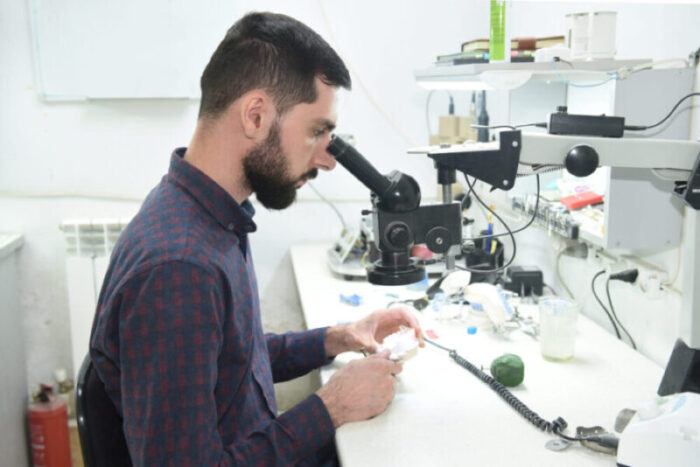
Aron Alpha offers a complete dental laboratory adhesive system designed for the needs of model building, prosthetic fabrication, and other dental applications. Our product line includes cyanoacrylate adhesives in multiple viscosities, setting times, and applicator configurations to support a wide variety of tasks. Customers can choose light viscosity for coating or assembling parts, medium viscosity for mending models, or heavy viscosity for filling undercuts and stabilizing abutments.
In addition to adhesives, Aron Alpha provides primers, accelerators, debonders, and application accessories that support fast curing, improved bonding to difficult plastics, and clean removal when necessary.
These options help laboratories match material performance with specific tasks, which supports accurate placement, reliable strength, and efficient processing. For labs interested in improving performance or evaluating materials for specialized processes, Aron Alpha adhesive dental products offer a range of choices that align with daily production requirements.
Adhesive Precision for Dental Professionals
Cyanoacrylate adhesives help dental labs manage everyday bonding tasks with speed, accuracy, and dependable strength across a range of materials. Their fast cure times and controlled application make it easier to complete repairs, secure components, and maintain workflow efficiency.
Aron Alpha provides adhesive options developed for the needs of dental laboratories, including multiple viscosities and tools that support precise placement and clean results. With products designed to perform reliably in demanding environments, Aron Alpha gives labs a practical way to maintain consistency and meet daily production goals.
For more information about our dental solutions, contact Aron Alpha today.